
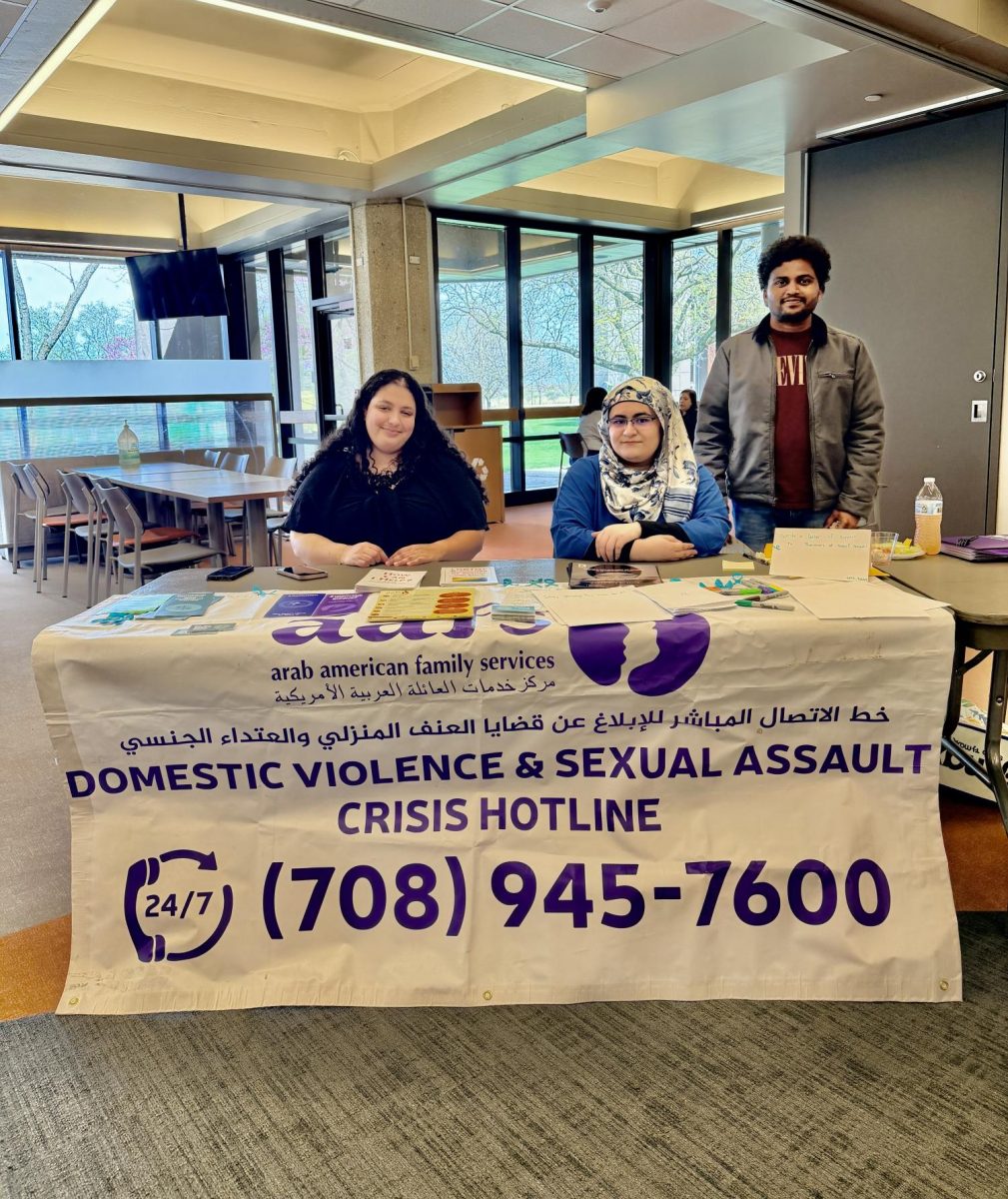
Governors State University hosted a domestic violence awareness event on April 22 aimed at educating students about the realities of abuse, warning signs and available support resources within the community.
The event featured informational brochures, discussions and resource materials that addressed both domestic violence and sexual assault. Students engaged with content that challenged common misconceptions, highlighted the impact of abuse and emphasized the importance of supporting survivors. As emphasized during the event, “Domestic violence is not just a personal issue, it is a pattern of power and control that thrives in silence.”
According to materials shared at the event, domestic violence is defined as a pattern of coercive behavior used by one partner to gain or maintain control over another. This can include physical, emotional, psychological, sexual and financial abuse. Organizers stressed that abuse is not always visible and often escalates over time if left unaddressed.
The brochures encouraged attendees to reflect on warning signs, including unexplained injuries, controlling behavior, isolation from friends and family, and sudden changes in behavior. One section prompted students to “ask yourself” questions about whether they may have overlooked signs of abuse in someone they know.
The event also addressed common myths, such as the belief that domestic violence is a private matter or that it is not serious. Information provided made clear that domestic violence is a crime with serious consequences, affecting not only individuals but families and communities as well.
Advocates Ayah Tomaleh and Rannia Alshaweesh, both advocates for victims of domestic violence and sexual assault, contributed to the event by sharing information on recognizing abuse, supporting survivors and connecting individuals to available resources. Their involvement emphasized the importance of community support and professional guidance in addressing these issues. One key message echoed throughout their discussions: “Listening without judgment can be the first step in helping someone find their way to safety.”
Attendees were also introduced to real-life scenarios illustrating how abuse can occur in different relationships, including situations involving control, threats and emotional manipulation. For example, one scenario described a partner who constantly monitored their significant other’s phone, restricted their contact with friends and family, and used guilt or intimidation to maintain control. These examples helped students better understand how complex and nuanced abusive relationships can be.
In addition, the event highlighted the long-term effects of abuse, including mental health challenges, increased risk of substance use and difficulties in maintaining healthy relationships. Organizers emphasized that early intervention and awareness can play a critical role in prevention.
Resources shared at the event included crisis hotlines, counseling services, legal advocacy and safety planning. Students were encouraged to support friends or family members experiencing abuse by listening without judgment, respecting their decisions and helping them explore options for safety.
The event reinforced the message that no one has to face abuse alone. Support systems, both on campus and in the broader community, are available to help individuals seek safety and begin the process of healing.