
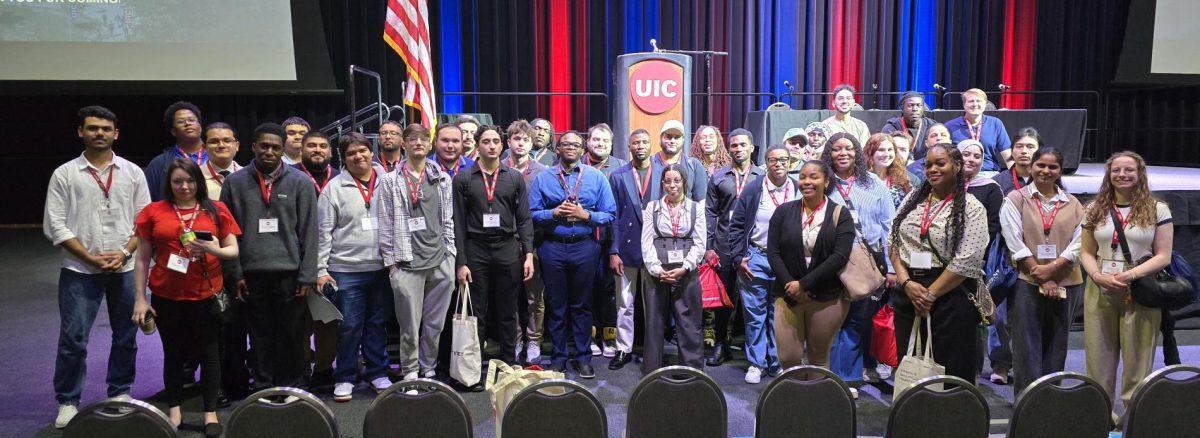
Students, faculty, and industry professionals came together at the University of Illinois Chicago for the Cybersecurity and Privacy Community Conference an event that highlighted the growing importance of digital security while giving students a closer look at how their studies translate into real-world impact.
The conference created an engaging environment where students could step outside the classroom and explore how cybersecurity affects nearly every aspect of modern technology. From social media platforms to banking systems and cloud-based applications, speakers emphasized that security is no longer optional it is a fundamental part of building any digital system.
For many students, the event served as both an eye-opener and a career-shaping experience. Sravani Mamidi, a student attendee, shared that her motivation for attending stemmed from curiosity and a desire to broaden her understanding beyond backend development. She saw the conference as an opportunity to learn how cybersecurity integrates with software systems and to connect with professionals already working in the field.
Throughout the conference, one of the strongest themes was the importance of building systems that are not only functional but also secure, reliable, and resilient. Experts stressed that security should be embedded into the design process from the very beginning. Waiting to address vulnerabilities later can lead to costly consequences, including data breaches and system failures.
Students were introduced to practical concepts such as secure API design, data protection strategies, and methods for handling unexpected cyber threats. These insights helped attendees understand how small design decisions like validating user input or managing data flow can have a major impact on system security.
Mamidi noted that one of her biggest takeaways was realizing that security is a mindset, not just a feature. She explained that developers must think proactively about protecting user data and preparing systems to handle real-world challenges.
Another key topic discussed was the rapid evolution of privacy concerns in a data-driven world. As technologies such as artificial intelligence and cloud computing continue to expand, the amount of personal data being collected and processed is increasing significantly. Speakers predicted that over the next decade, privacy will become an even more critical issue, requiring stronger regulations, better technological solutions, and increased user awareness.
The role of artificial intelligence in cybersecurity sparked particularly engaging discussions. On one hand, AI is being used to detect threats more efficiently, analyze large datasets, and automate security processes. On the other hand, it is also being leveraged by cybercriminals to develop more advanced attacks, such as sophisticated phishing schemes and automated hacking tools. This dual nature of AI highlighted the need for responsible innovation and ethical considerations in technology development.
Beyond the technical sessions, the conference also emphasized the value of collaboration. By bringing together students, researchers, industry experts, and policymakers, the event created a platform for meaningful dialogue. These interactions allowed students to gain insights into industry expectations while also understanding how policies and regulations shape the cybersecurity landscape.
Mamidi pointed out that events like this are essential for bridging the gap between theory and practice. She noted that students benefit from seeing how concepts learned in class are applied in real-world scenarios, while organizations gain access to fresh perspectives and emerging talent.
The conference also shed light on broader societal challenges related to cybersecurity. Issues such as data breaches, ransomware attacks, and identity theft continue to grow in both frequency and complexity. At the same time, a lack of awareness among everyday users makes it easier for these threats to succeed. Speakers emphasized the importance of education not just for professionals, but for the general public to create a more secure digital environment.
Looking toward the future, students expressed interest in seeing more hands-on workshops and interactive sessions at similar events. Opportunities to work through real-world scenarios, solve security challenges, and engage directly with experts could further enhance the learning experience.
Overall, the Cybersecurity and Privacy Community Conference at UIC provided students with more than just information it offered perspective. It showed that cybersecurity is not just a specialized field, but a critical component of all technology. For students preparing to enter the tech industry, the event reinforced an important lesson: building the future means building it securely.