
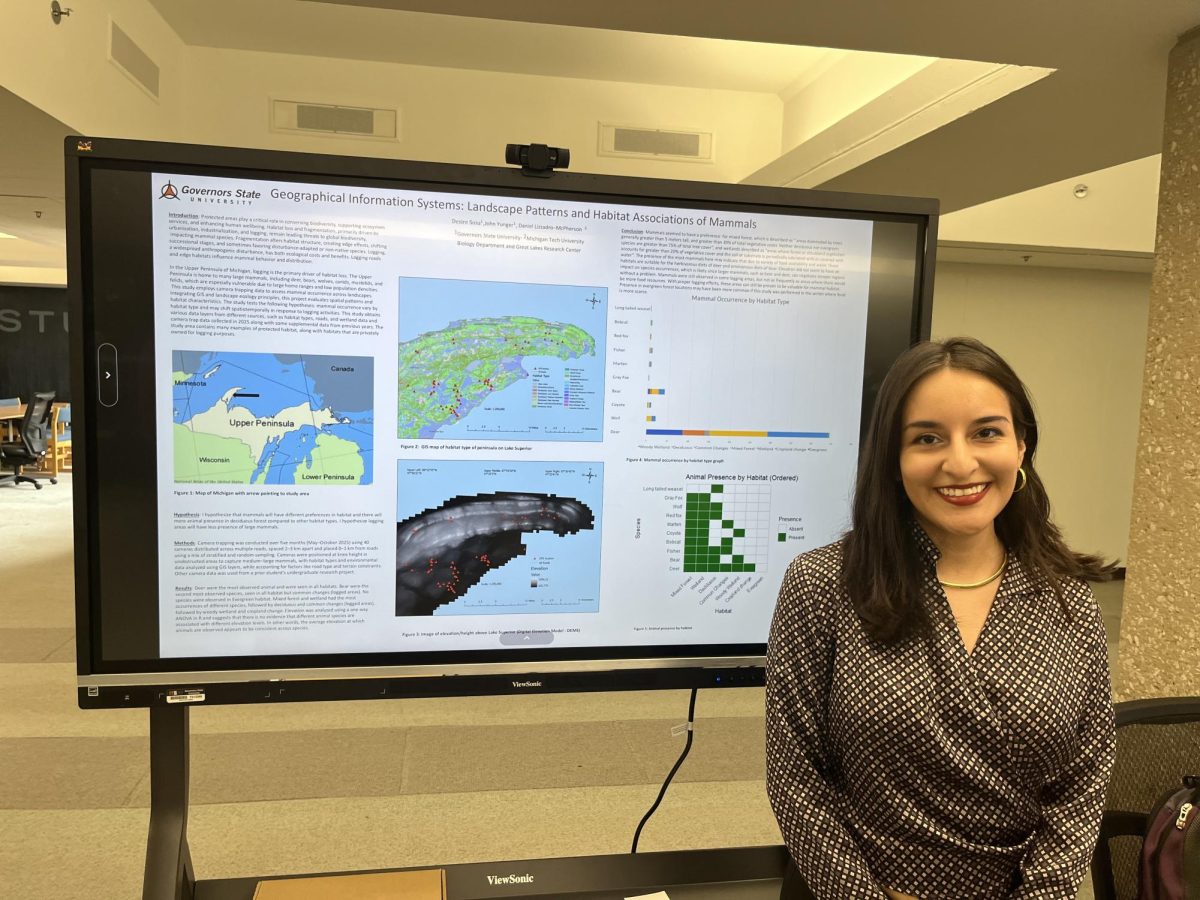
Governors State University’s Research Day, held on April 9, highlighted how student research can connect directly to the broader goals of Earth Month, bringing attention to environmental challenges and the role of academic inquiry in addressing them. The event served as a platform where students presented projects that not only demonstrated academic rigor but also reflected a growing awareness of sustainability and ecological responsibility.
Earth Month, often recognized globally as a time to reflect on environmental impact and promote sustainable practices, found a meaningful expression through Research Day at GovState. Rather than limiting the conversation to awareness, the event showcased how students are actively engaging with real-world environmental issues through research, innovation, and critical thinking.
One of the key themes that emerged from student presentations was the loss of natural habitats, particularly driven by deforestation for timber. Research highlighted how the increasing demand for wood products continues to reshape ecosystems, forcing animals out of their natural environments and disrupting biodiversity. These projects emphasized that environmental challenges are not isolated problems but interconnected systems affecting wildlife, climate, and human life.
Among the presenters, Desire Sosa, John Yunger, and Daniel Lizzandro-McPherson contributed to the discussion by focusing on habitat loss and its long-term environmental impact. Sosa shared that she hopes to expand this work into her final thesis project, aiming to further explore how timber harvest affects wildlife and to raise awareness through in-depth research.
Faculty mentor Yunger’s guidance played an important role in shaping these discussions. As an expert in ecology and conservation, he emphasized the strong connection between trees, wildlife, and overall ecosystem stability. The speakers highlighted that environmental preservation requires a holistic approach. For example, the cutting of forests for timber was discussed not only as a loss of natural resources, but as the disruption of entire ecosystems that support diverse species.
Research Day also highlighted the importance of student-driven inquiry. Students explored topics such as habitat destruction, climate impact, and sustainable practices, demonstrating how academic research can translate into awareness and potential solutions. This aligns closely with the purpose of Earth Month, which encourages individuals to move beyond awareness and take meaningful action.
The connection between Research Day and Earth Month reflects GovState’s commitment to integrating education with real-world impact. By encouraging students to investigate environmental issues, the university is preparing them to become informed leaders who can address challenges related to sustainability and conservation.
For many attendees, the event reinforced the idea that small actions whether through research, advocacy, or daily habits can contribute to larger environmental change. The projects presented served as reminders that the future of the planet depends not only on policy and technology but also on awareness, education, and individual responsibility.
As Earth Month continues, Research Day stands as a powerful example of how academic institutions can bridge the gap between learning and action. At Governors State University, students are not only studying environmental issues they are actively engaging with them, contributing ideas, and helping shape a more sustainable future.