
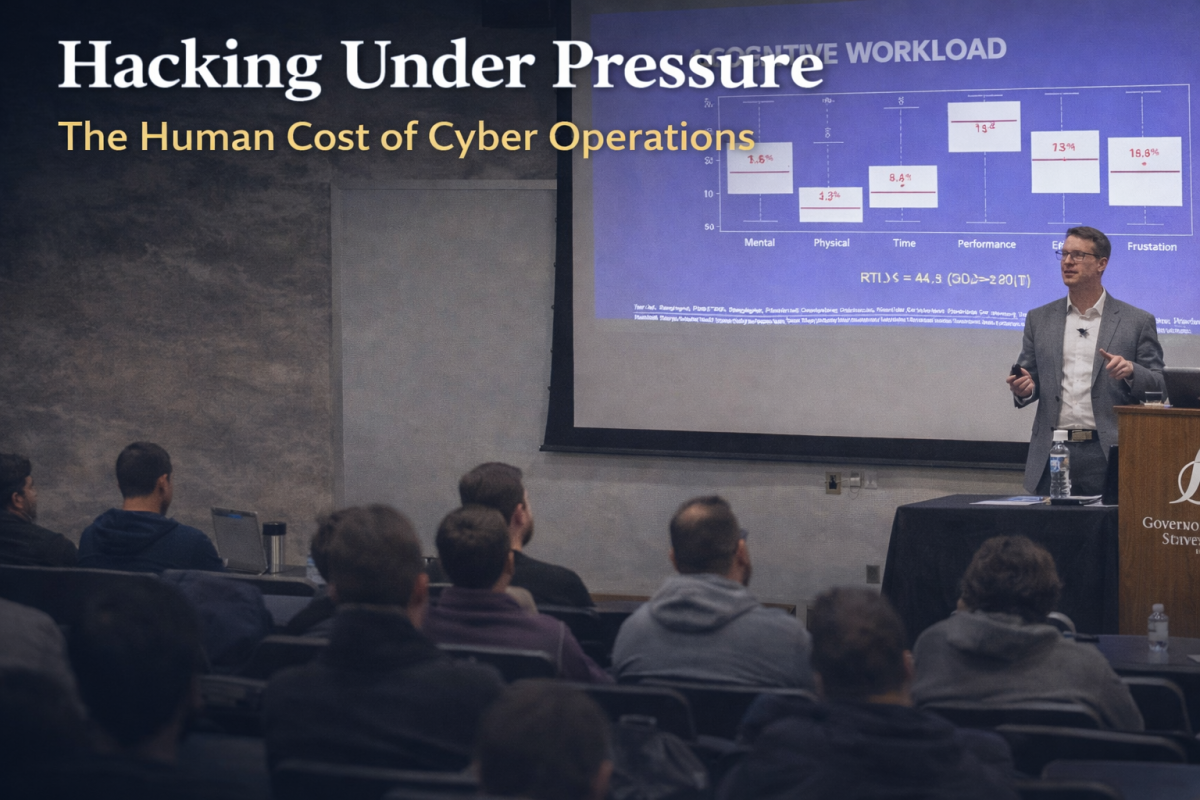
Governors State University hosted a Pathway to Success: Professional Series event titled “Hacking Under Pressure: The Human Side of Cyber Operations” on Tuesday, March 24, offering attendees a deeper understanding of the psychological and cognitive demands associated with cybersecurity operations.
The session featured ACM Distinguished Speaker Dr. Josiah Dykstra, who presented “Stress and Hacking: Understanding Cognitive Stress in Tactical Cyber Operations.” Drawing on research conducted at the National Security Agency (NSA), Dykstra examined how factors such as cognitive workload, fatigue, frustration, and time pressure influence performance and decision-making in high-stakes cyber environments.
Through empirical data and visual analysis, the presentation highlighted the significant mental demands placed on cyber operators. Key workload components including mental demand, effort, and performance pressure were identified as major contributors to overall strain, underscoring the complexity and intensity of real-time cyber operations.
Dykstra also addressed the issue of burnout within the cybersecurity workforce, noting its connection to prolonged exposure to high-pressure tasks. He emphasized that compensation alone is not sufficient to retain professionals in such environments, stating, “Zero people said it was for pay in hindsight… if we had paid you more money, would you have stayed? They said no.” This observation reinforces the importance of improving working conditions and organizational support systems.
The discussion further examined measurable increases in fatigue during operations. As Dykstra noted, “Fatigue… goes up by about 16% across all of these people,” highlighting the tangible impact of sustained cognitive effort on both performance and well-being.
In addition, the session introduced key research questions focused on the future of cybersecurity operations, including methods for detecting and predicting fatigue, the role of real-time analytics in risk assessment, and strategies for evaluating operator performance dynamically. These considerations reflect an increasing emphasis on integrating human-centered approaches into technical systems.
Overall, the event underscored the critical need to balance operational efficiency with workforce sustainability. By addressing the human factors that influence cybersecurity outcomes, the session encouraged attendees to consider how leadership, system design, and policy can better support professionals working in demanding cyber environments.
Contact for Further Information:
Josiah Dykstra, Ph.D.
[email protected]