
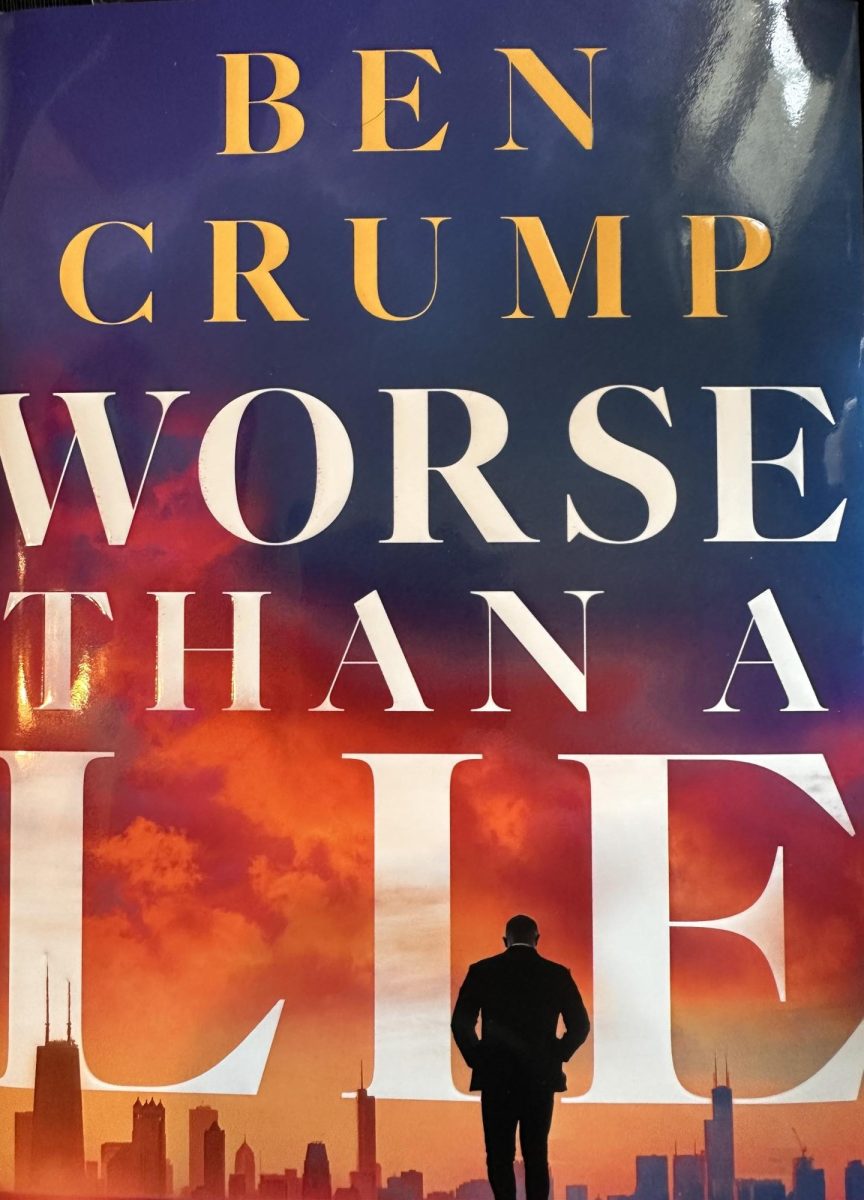
Governors State University students will have an opportunity to explore themes of justice, race, and policing through a campus book discussion centered on a new novel titled “Worse Than A Lie” by civil rights attorney Ben Crump.
The program, organized through University Housing and Auxiliary Services in partnership with the Office of Institutional Excellence, the Counseling and Wellness Center, and campus housing, is part of the university’s upcoming National Day of Dialogue conference in May.
Students were invited to pick up free copies of the book during the De-Stress Event that was held in the Hall of Governor’s on March 12, and read it ahead of a facilitated discussion scheduled for May 7.
“We partnered with Institutional Excellence along with counseling and wellness and housing,” said Quiana Stone, director of Auxiliary Services and University Housing. “This is housing and auxiliary services taking a lead on part of that conference.”
Crump’s novel, the first in a planned series, is a legal thriller set in Chicago. It explores the complex relationship between communities and law enforcement.
The story follows a Black police officer who previously worked for the Chicago Police Department and now works for Chicago’s Metra system. On the night of the historic election of Barack Obama in 2008, the officer is driving home from a second job when he is pulled over by Chicago police.
An incident occurs during the stop, launching a legal case that draws the attention of a nationally known attorney who happens to be in Chicago working on another matter. The lawyer becomes involved in the case, leading to a suspenseful legal battle filled with twists and turns.
Stone said the novel blends suspense with real-world themes students can relate to.
“It’s a little suspenseful, a little intrigue,” Stone said. “Some real places, but the backdrop is Chicago — right here in our backyard.”
She added that readers who enjoy legal thrillers and crime fiction may find the book especially engaging.
Crump is widely known for representing families in several high-profile civil rights cases, including those involving George Floyd and Breonna Taylor. His work has placed him at the center of national conversations about policing and racial justice.
According to Stone, the university hopes the novel will help spark thoughtful conversations among students about those same topics.
The book discussion will be facilitated during the Day of Dialogue conference, where participants will reflect on the themes presented in the story and how they relate to broader issues involving justice, policing, and community relationships.
Stone said campus staff will also help guide the conversation and support students who want to process the issues raised in the book.
“The idea is to come back together after everyone has had the chance to read it and talk about our reactions,” she said.
Campus partners—including the Counseling and Wellness Center and the Office of Institutional Excellence—will help facilitate the discussion and reach out to students who participate. Organizers hope the collaboration creates a safe and supportive space for conversation.
The discussion will allow students to examine the book’s themes while also connecting them to real-world experiences and perspectives.
By offering the books free of charge and hosting an open dialogue afterward, university organizers say they hope to encourage student engagement, reflection, and meaningful conversation across campus.