
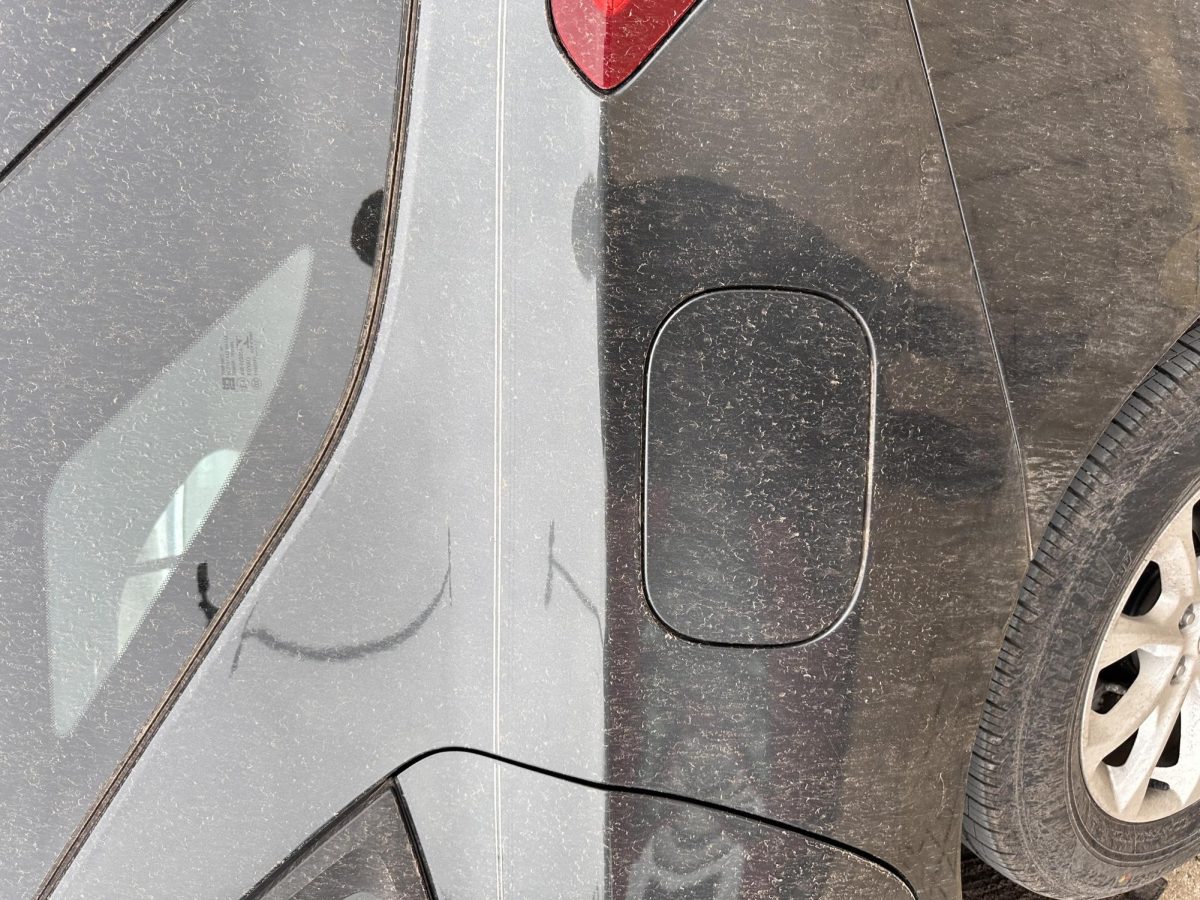
On Feb. 18, many Chicago-area residents woke up to an unusual sight: cars coated in a thin layer of grime, windows streaked with dusty droplets and a faint haze hanging in the air. What initially seemed like “dirty rain” was the result of a weather system that carried fine particles of dust and pollutants before releasing steady rainfall across the region.
Meteorologists say this kind of event can happen when strong winds lift dust from dry areas — sometimes even from as far away as the Plains — and push it into the Midwest. When rain develops within that same system, the water droplets collect those particles and deposit them on surfaces below. The result is muddy residue left on windshields, sidewalks and building exteriors.
For students at Governors State University, the impact was mostly cosmetic — but noticeable. Several commuters reported needing an extra trip through the car wash, and facilities staff worked to clear streaked glass around campus entrances. The event also served as a reminder of how interconnected weather systems can be, with conditions hundreds of miles away influencing what lands in University Park.
While the rain itself did not pose a health threat for most people, experts often advise those with asthma or other respiratory sensitivities to limit prolonged outdoor exposure when airborne dust levels increase. Once the system moved through, colder air followed, shifting precipitation back toward snow and typical late-February conditions.
As winter continues, students should expect fluctuating patterns — brief warmups, gusty winds, and the possibility of mixed precipitation. Keeping an eye on changing forecasts can help commuters plan ahead, especially with icy conditions possible after overnight temperature drops.
If you snapped photos of the dusty rainfall around campus, consider sharing them — weather moments like this don’t happen every week, and they’re a reminder that even routine rain can carry a story.